Blog

  • | |

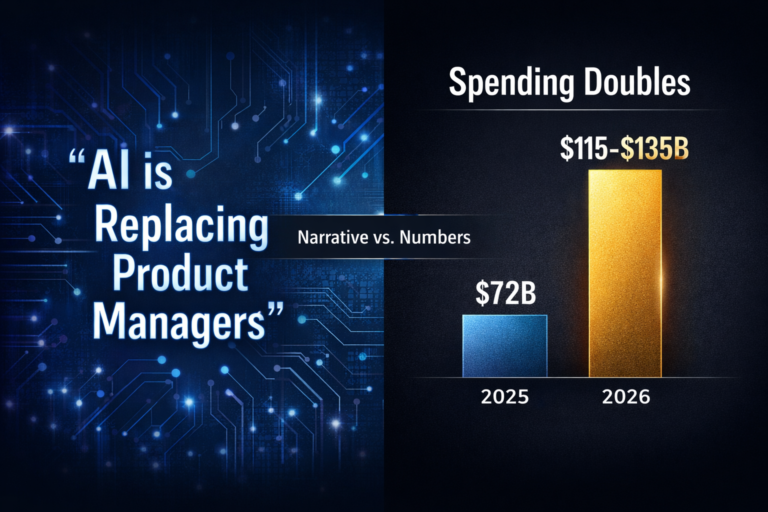
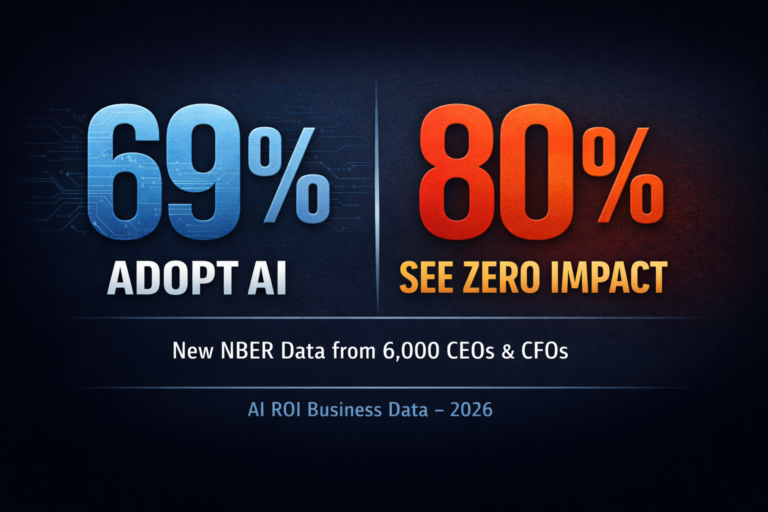
    The AI Sales Productivity Paradox: Why 95% of Organizations See No Measurable Returns Despite Record Adoption

    Despite record investment in AI sales tools, 95% of organizations see no measurable productivity or revenue gains. Drawing on data from Insight Partners, Bain, McKinsey, and MIT, this article explains why AI succeeds at augmentation but fails at automation—and what the small minority of top performers do differently.

  • | |

    Beyond “Act Like a CEO”: Engineering High-Fidelity Synthetic Personas for SaaS

    Most founders use AI prompts like “Act like a CEO” and get polite, useless answers. This article shows how to engineer high-fidelity synthetic personas that mirror real SaaS buyers—complete with constraints, biases, and objections—so you can validate positioning, pricing, and product decisions before wasting months building the wrong thing.

  • Leverage PTO and Increased Scheduling Flexibility to Help Your Business Grow

    Leverage PTO and Increased Scheduling Flexibility to Help Your Business Grow
    A guest post by Frank Mengert

    It wasn’t that long ago that working from home or having a flexible schedule felt like a rare business perk. Those days are officially behind us. Today, remote teams and hybrid offices are the new standard in many industries.

    A lot of good has come from this shift. Many businesses have seen a reduction in office costs and more hiring options when exploring different candidate pools. For your teams, the real benefit of this new way of working is the scheduling flexibility it offers.

    By giving each of your employees more control over their daily work lives or by offering improved PTO allowances, you are contributing to a working environment and culture that your employees are excited to be a part of and stick around for the long term.
    The Evolution of Employee Value Propositions

    To understand what your employees are really looking for in you as an employer, you have to look at your Employee Value Proposition (EVP). Think of this as the unspoken deal between you and your staff. They give you their time and talent, and in return, you provide different forms of compensation in the form of a regular paycheck and benefits offerings.

    Years ago, a traditional benefits package typically centered on basic health insurance and possibly a retirement plan. While those are still important elements, the top professionals now expect more from their employers. And in most cases, if you were to ask your team what they value most today, flexible working hours would likely be at the top of their list.

    Offering this type of flexibility sends a powerful message about your company culture. When you offer generous time off or trust people to work remotely without strict oversight, you show that you value them as adults and trust their decisions. This helps evolve your relationship from strictly transactional to a genuine connection between employees and the brand.
    Understanding The Financial Impact of Flexible Staffing Policies
    Mitigating the High Cost of Turnover

    Locating and hiring new employees is expensive, but losing them shortly after they start is even worse. When this happens, you lose more than just the resources invested. Depending on the knowledge and experience of the employee leaving, you also lose out on an opportunity to help your business scale faster. This type of talent can’t be replaced.

    And this applies to all of your team members. If a key employee on your team leaves unexpectedly, it can take six months to a year for a new person to reach that same level of skill. The good news is that while you can’t stop everyone from moving on when it’s their time, you can give them more reasons to stay.

    Offering adaptable work schedules is a great way to protect your business now and in the future. When you respect your team’s need for rest or personal time, it helps to build real loyalty. This helps you avoid constant hiring cycles and keeps your company’s foundation strong.
    Reducing Costs and Expanding Your Reach

    Transitioning to a hybrid or remote hiring model means you’ll need to change how you manage people. In a traditional office, you can see people working and collaborating in person. This makes it easier to gauge who is staying focused.

    However, when your team is spread out, you can’t rely on those visual cues the same way. Instead, you’ll want to start focusing on the results your teams produce rather than the specific hours they spend at a desk.

    This shift actually makes things clearer for everyone. Your team will know exactly what a “good job” looks like, and you can reward people based on their actual work. By removing personal bias from the process, you can manage a remote team effectively while keeping everyone motivated.
    Creating a More Resilient and Adaptive Corporate DNA
    Shifting from Supervision to Empowerment

    Strict control doesn’t work well when your team is remote. To keep your teams operating effectively, you have to focus on establishing the right goals instead of constant supervision. Taking this approach gives your teams the empowerment they need to make and feel more confident in their own choices every day.

    This can be a challenge, however, if you are used to seeing everyone in their cubicles. It requires a high level of trust to believe your team is staying productive without you watching over them.

    Building this kind of independence requires more than just a hands-off attitude. You also need to make sure your workers have easy access to the tools and information they need. This means ensuring that any important processes or workflows are accessible, and that data isn’t locked away in file systems your teams can’t directly access.

    By leveraging best-of-breed benefits platforms and other HR tools, you’re able to store things like insurance details, training guides, or other benefits information in one easy-to-access location. This helps your teams feel empowered when making benefits coverage decisions, no matter where they are logging in from and when.
    Equipping Leadership for New Management Challenges

    Transitioning to a flexible workspace also means focusing on how your managers lead. Managing people from a distance requires more intention than managing them in person. Your leadership team needs to know how to run digital meetings that actually feel meaningful.

    Their priority should be on removing obstacles for their team and checking in on their well-being. This is where coaching becomes essential. You should show your managers how to use messaging apps and video calls to keep everyone in sync without over-communicating.

    When you invest in these leadership skills, you make sure that working independently doesn’t turn into feeling isolated. This keeps your output high and ensures every person on your team feels like they are a vital part of the mission.
    Leverage Increased PTO and Flexibility to Help Drive Your Business Success

    When you treat time-off policies and flexible hours as strategic advantages for your business, it can change how you manage and grow your organization.

    Offering these types of benefits doesn’t just help to save the business money and reduce turnover – it helps create a professional culture where people feel accountable and valued for what they bring to the table.

    Author Bio: Frank Mengert
    Frank Mengert continues to find success by spotting opportunities where others see nothing. As the founder and CEO of ebm, a leading provider of employee benefits solutions. Frank has built the business by bridging the gap between insurance and technology driven solutions for brokers, consultants, carriers, and employers nationwide.
    Image located below

  • | |

    Why Your Next 50 Customer Interviews Should Be Synthetic (And How It Fixes the B2B Cold Start Problem)

    Why wait weeks for feedback on your B2B product? The “cold start problem” demands speed that traditional interviews can’t match. Discover why your next 50 interviews should be synthetic to bypass scheduling delays and unlock fast, scalable insights immediately.

  • |

    Enterprise AI Adoption in 2025: The Margin Crisis Nobody’s Talking About

    The era of near-zero marginal cost software is ending. As AI inference turns infrastructure into a consumable product, we are witnessing a critical “margin inversion”—dropping potential profits from the SaaS standard of 80% down to hardware-like levels. This analysis explores the 2025 economics of AI adoption and what executives must do to adapt.

  • | |

    The 90% Trap: Why Synthetic Research Confirms What You Already Know

    Synthetic research can deliver 90%+ accuracy—but that’s exactly the problem. AI-generated personas excel at confirming known patterns, not discovering what truly matters: the unexpected, emotional, high-impact insights that only real human interviews reveal. Here’s why the “90% accuracy” headline is a trap—and how to use synthetic research without fooling yourself.

  • | |

    European Venture Capital Valuations 2025: The Complete Data-Driven Analysis Reshaping Startup Funding

    European venture capital valuations in 2025 tell a far more complex story than headline-driven AI hype suggests. While select AI and fintech companies continue to command premium valuations, the broader market is settling into a more measured equilibrium—revealing sharp divergence by sector, stage, and geography. This analysis breaks down what the latest data means for founders, investors, and late-stage unicorns navigating a capital environment defined by selectivity rather than speculation.