How to Use AI Ethically in Business and Drive Innovation Responsibly
A guest post by Gloria Martinez (gloriamartinez@womenled.org)
For local business owners, department managers, and small teams rolling out AI to move faster, the biggest risk isn’t choosing the wrong model, it’s losing trust. AI ethics in business shows up in everyday decisions: who gets screened out, whose data gets reused, and who carries the consequences when automation goes wrong. The ethical challenges of AI can quietly shape customer experience, employee morale, and community impact long before anyone notices the pattern. Responsible AI adoption helps business innovation and ethics work together so the impact of AI on stakeholders stays aligned with the values a business depends on.
Understanding the Ethical Basics of Business AI
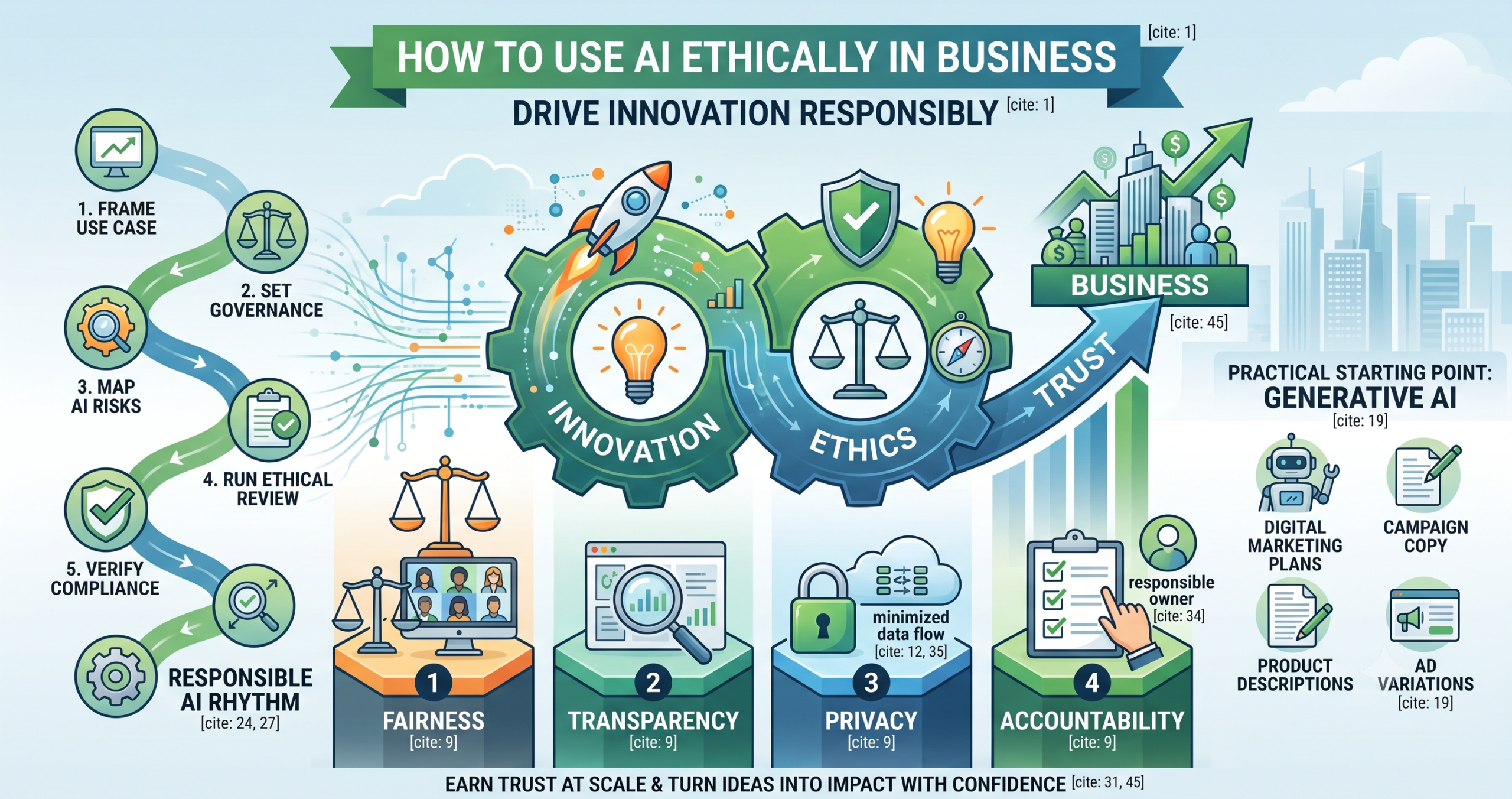
Ethical AI is not a sticker you put on a tool. It is a set of working principles that shape how you design, buy, and use AI in daily operations. Responsible AI prioritizes fairness in outcomes, transparency in how decisions are made, privacy in how data is handled, and accountability for results.
Fairness helps prevent certain groups from being consistently disadvantaged by automated screening or pricing. Transparency makes it easier to spot errors, explain decisions, and fix harm, since AI accountability is AI transparency. Privacy and accountability protect relationships when customer or employee data is involved.
Picture an AI assistant that ranks job applicants. If it cannot explain why it downgraded certain resumes, bias can hide in plain sight. If it comes from sensitive data, even a “helpful” shortcut can cross a line. With these principles clear, it becomes easier to choose AI use cases that create value without raising avoidable risk.
Choose the Right AI for the Job—Especially Generative AI
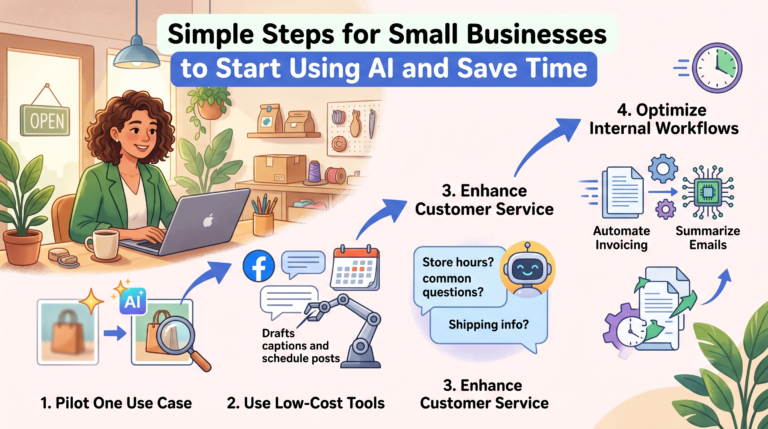
Once you understand the ethical basics, it’s easier to spot where AI can create real business value without overreaching. AI can benefit your business by helping teams do more with less, especially in areas where speed and volume matter. For many organizations, generative AI is a practical starting point because it can support affordable, high-impact content creation for digital marketing plans, such as drafting campaign copy, refreshing product descriptions, or generating variations for ads and social posts.
What makes generative AI distinct is that it produces new, original creative output, rather than just finding patterns in existing data. Predictive or analytical AI is typically used to forecast outcomes or analyze trends; generative AI is used to create content. If you’re unsure which category a project fits into, learning the difference between generative AI and other AI approaches can help you choose tools and use cases that match your goals. From there, you’re ready to think through how to move from idea to rollout responsibly.
From Idea to Rollout: A Responsible AI Rhythm
This workflow turns responsible AI implementation into a habit rather than a one-time policy exercise. It helps teams move quickly while staying aligned on safety, fairness, and accountability, especially as new tools and use cases appear.
| Stage | Action | Goal |
| Frame the use case | Define user, decision impact, and success metrics | Clear boundaries for what AI should and should not do |
| Set governance | Assign owner, approver, and escalation path | Decisions stay consistent as projects multiply |
| Map AI risks | Identify, evaluate, and prioritize model and data risks | Shared view of exposure and acceptable tradeoffs |
| Run ethical review | Check bias, privacy, transparency, and human oversight | Fewer surprises for customers and employees |
| Verify compliance | Confirm legal, security, and recordkeeping requirements | Launch readiness with auditable documentation |
| Pilot and learn | Test, monitor outcomes, and update controls | Safer scaling based on real performance |
The stages reinforce each other: governance clarifies who decides, risk mapping focuses on what to test, and review and compliance turn findings into safeguards. Over time, pilots produce evidence that improves your rules and speeds up future launches.
Ethical AI Quick-Check Before You Scale
This checklist helps you spot weak points early, protect people’s data, and still move from idea to impact with confidence. Use it before a launch, a vendor purchase, or a team rollout.
✔ Define the use case and non-goals in plain language
✔ Assign a responsible owner, approver, and escalation contact
✔ Minimize employee and customer data collected for the task
✔ Document data sources, retention limits, and access controls
✔ Test for bias across key user groups and outcomes
✔ Add human review for high-impact or uncertain decisions
✔ Communicate AI use, limitations, and opt-out paths to users
Check these off, then ship improvements with integrity.
Turning Ethical AI Into Sustainable Business Innovation
The pressure to move fast with AI can collide with real obligations to customers, employees, and communities, especially when trust is easy to lose. Balancing AI innovation and ethics means treating responsible design, transparency, and governance as the default mindset, not an afterthought. When that approach guides decisions, ethical AI adoption becomes easier to scale because risks are surfaced early and business responsibility with AI is clear across teams. Responsible AI is how innovation earns trust at scale. Pick one high-impact change this week, tighten data access, run a bias check, or clarify accountability, so you can keep empowering ethical AI use as the future of AI in business unfolds with resilience.